Extended Producer Responsibility (EPR)
is a key environmental strategy where producers, importers, and brand owners
(collectively known as PIBOs) take full responsibility for the environmental
impacts of their products, especially plastic packaging, throughout the product
lifecycle. In India, EPR is legally mandated under the Plastic Waste Management (PWM) Rules, ensuring that companies that
introduce plastic into the market are also accountable for its end-of-life
disposal.
EPR for plastic packaging essentially requires companies to collect, recycle, and process the plastic waste they generate. This effort promotes a circular economy by encouraging responsible production and sustainable waste management practices.
Plastic Packaging Categories under EPR
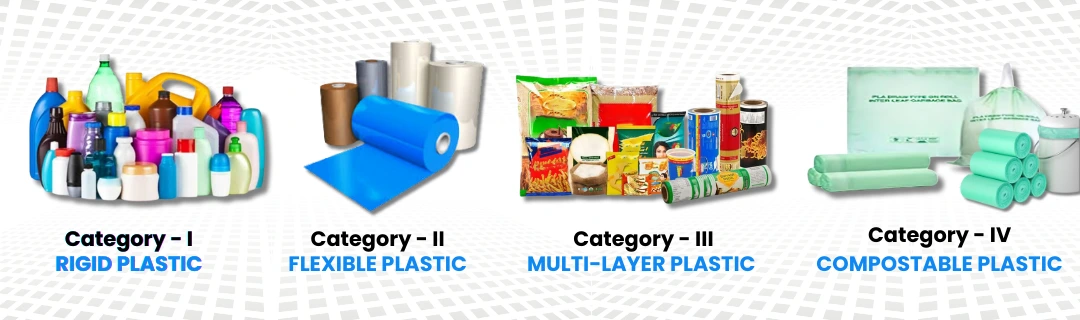
Plastics under the rules of PWM is classified into two categories:
- Category I: Rigid plastic packaging materials.
- Category II: Flexible plastic packaging, including single-layer or multi-layer plastic (comprising different types of plastic), plastic sheets, covers made from plastic sheets, carry bags, and plastic sachets or pouches.
- Category III: Multi-layered plastic packaging, consisting of at least one layer of plastic combined with at least one non-plastic material.
- Category IV: Plastic sheets and similar materials used for packaging, along with carry bags made from compostable plastics.
Entities Required to
Register Under EPR Guidelines
Under the latest amendments to the PWM
Rules, the following entities are mandatorily
required to register for EPR through the Central Pollution Control Board
(CPCB) portal:
- Producers of plastic packaging materials
- Importers of plastic goods or packaging
- Brand Owners who introduce products with plastic packaging
- Sellers or Importers of Raw Material
- Manufacturers of Raw Material
- Plastic Waste Processors (PWPs) engaged in:
(a). Recycling
(b). Waste-to-energy
(c). Waste-to-oil
(d). Industrial composting
- Micro, Small, and Medium Enterprises (MSME) are categorized as producers
Additionally, online marketplaces, supermarkets, and retail chains also fall
under the EPR framework when they deal with plastic packaging.
Special Provision for Multi-State Operators
Entities operating in more than two
states must register with the CPCB,
while those functioning in only one or two states should register with their
respective State Pollution Control
Boards (SPCBs) or Pollution Control
Committees (PCCs).
Exemptions Under EPR for
Plastic Packaging
While the EPR framework applies
widely, there are specific exemptions
granted to certain categories:
- Brand Owners in Micro & Small Scale Categories are exempted from registering under the EPR regulations.
- If such entities engage with large producers, the responsibility may shift to the latter under joint accountability clauses.
This clause supports smaller
businesses while maintaining the regulatory intent of environmental protection.
Legal Basis and Amendments
in EPR Policy
On February 16, 2022, the Ministry
of Environment, Forest, and Climate Change (MoEFCC) notified a critical
amendment to the PWM Rules. As per this amendment, Schedule II outlines detailed EPR
guidelines, which must be strictly followed by:
- PIBOs
- Plastic Waste Processors (PWPs)
These amendments streamlined the compliance process and laid the groundwork for a centralized EPR portal, enabling businesses to track and fulfill their obligations digitally.
Also Read
Extended Deadline for Filing Annual Returns for Plastic Waste Management. New deadline: July 31st, 2025.
CPCB EPR Portal: Centralized Online Registration
The Government of India introduced a centralized online portal, developed by the CPCB, for managing EPR registrations.
- Official Portal: https://eprplastic.cpcb.gov.in
- Access Requirements: PAN, GST, CIN, and authorized signatory details.
- Jurisdiction: Central registration for multi-state operators, SPCB/PCC registration for one/two-state operators
This portal ensures that all
processes—from registration to certification and compliance—are monitored and
recorded in one place.
Step-by-Step Procedure for
EPR Registration
Registering for EPR is a five-step digital process:
Step 1: Online Registration: The applicant must register their business by creating a profile on the CPCB portal, uploading basic company details.
Step 2: Submission of Documents: Upload all required documents (explained below), product details,
and plastic packaging categories.
Step 3: Scrutiny by CPCB: The
submitted application is scrutinized for accuracy and completeness. If any
discrepancies are found, the applicant will be notified for correction.
Step 4: Approval or Rejection: CPCB either approves the application or rejects it with a stated
reason. Rejected applicants can reapply after making necessary changes.
Step 5: Waste Management Implementation: Post-approval, the company must implement its EPR waste management
plan, engage with PWPs, and submit annual reports through the portal.
Required Documents for EPR
Registration
The following documents must be submitted in PDF format (max 5MB each):
- Company PAN, GST & CIN
- PAN and Aadhaar of the Authorized Signatory
- Previous Registration Certificate (for renewals)
- Details of Products and Quantities Produced
- Representative Image of Plastic Packaging
- District Industries Centre Certificate (if applicable)
- Consent to Operate under Part B for further verification
It is advised to verify the clarity and size of each document before uploading to
avoid rejection.
Application Fees for PIBOs
and PWPs
For PIBOs (based on Plastic Waste Generation per Annum):
|
Waste Slab (TPA) |
Processing Fee |
|
Less than 1000 TPA |
₹10,000 |
|
1000–10,000 TPA |
₹20,000 |
|
More than 10,000 TPA |
₹50,000 |
For PWPs:
|
Waste Slab (TPA) |
Processing Fee |
|
Less than 200 TPA |
₹5,000 |
|
200–2,000 TPA |
₹20,000 |
|
More than 2,000 TPA |
₹50,000 |
Annual Processing Fee: 25% of the original application fee must be paid yearly for continued registration.
Role of Local Bodies and
Compliance Authorities
Local urban and rural bodies are
responsible for setting up Plastic Waste
Management (PWM) systems. They must collaborate with PIBOs and Brand Owners
to collect and manage plastic waste effectively. CPCB and SPCBs enforce
compliance, maintain data, and ensure that waste is processed through authorized PWPs.
How to Implement the EPR
Waste Management Plan
Once the CPCB grants approval, the
real work begins—implementing the EPR
Plan. This involves:
- Partnering with Plastic Waste Processors (PWPs): Only registered PWPs can process plastic waste under the EPR system.
- Tracking Waste Quantities: Companies must monitor how much plastic they generate, recycle, or dispose of.
- Annual Compliance Reports: Businesses are obligated to file reports detailing:
- Recordkeeping: Maintain proof of agreements with PWPs, and keep copies of all PWP certificates obtained.
It is important that the waste
management system aligns with the targets
assigned by CPCB based on your product volume and packaging type.
Understanding EPR Target
Fulfillment via PWP Certificates
To prove compliance with assigned EPR
targets, PIBOs and SIMPs must use PWP
certificates. Here's how the system works:
- PWPs issue certificates for the volume of plastic waste processed (recycled, composted, incinerated, etc.).
- PIBOs purchase or acquire these certificates from PWPs.
- These certificates are then uploaded to the CPCB portal as evidence to offset their plastic waste obligations.
- Certificates are subject to audit and must match the quantity declared in the EPR plan.
Note:
Certificates cannot be reused or
duplicated and are traceable through the CPCB’s digital records to prevent
fraud.
Penalties and
Environmental Compensation for Non-Compliance
Entities that fail to register or do
not meet their EPR obligations face strict penalties:
- Environmental Compensation (EC): Financial penalties imposed based on the quantity of non-compliant plastic.
- Legal and Administrative Action: CPCB may cancel registrations, impose bans, or escalate to legal authorities.
- Public Blacklisting: Non-compliant companies may be listed on government portals, damaging reputation and market trust.
Hence, timely registration and
diligent reporting are not just legal obligations but critical for business continuity.
Challenges Faced by PIBOs
in EPR Compliance
Despite a well-defined framework, many
PIBOs face hurdles, especially Micro and Small Enterprises:
- Digital Barriers: Lack of technical knowledge to use the CPCB portal efficiently.
- Cost Constraints: High registration and waste processing fees are a burden for smaller companies.
- Lack of Awareness: Unclear understanding of documentation and procedural requirements.
- PWP Availability: Limited access to certified waste processors in certain regions.
To tackle this, several states have
initiated training programs, and
CPCB has released user manuals and video
tutorials on its website.
Benefits of EPR Compliance
EPR compliance isn’t just a regulatory
requirement—it brings several long-term benefits:
- Environmental Protection: Reduces landfill waste and pollution by promoting recycling.
- CSR Enhancement: Improves brand reputation and supports sustainable business practices.
- Regulatory Ease: Prevents legal issues and fines by ensuring proactive adherence.
- Market Advantage: Many large buyers prefer dealing with EPR-compliant suppliers, creating new business opportunities.
Companies that adopt a sustainable
approach early are better positioned for future environmental mandates and
consumer trust.
Tips for Smooth
Registration on the CPCB Portal
To avoid application rejection or
delays, follow these pro tips:
- Pre-check Documents: Ensure PDF files are below 5MB and all information is clear and consistent.
- Use Updated Browser: The portal works best with modern browsers like Chrome or Edge.
- Avoid Incomplete Submissions: Submit all mandatory fields and avoid “TBD” or “NA” placeholders.
- Stay Informed: Regularly check CPCB notifications and updates on the portal.
Conclusion
With the 2025 regulatory environment
getting stricter, compliance with EPR for Plastic Packaging is no longer
optional—it’s mandatory. The government has established a transparent and
structured process accessible to businesses of all sizes. Whether you are a
multinational or a small brand, taking responsibility for your plastic waste
not only meets legal requirements but also reflects your commitment to a
sustainable future.
Now is the time to register, comply,
and lead by example in reducing plastic waste in India. Let EPR not just be a
regulation—but a revolution in responsible packaging.
FAQs on EPR for Plastic
Packaging
1. Who is
required to obtain EPR registration?
Ans. All Producers, Importers, Brand Owners (PIBOs) and Plastic Waste Processors (PWPs) are required to register under EPR
guidelines, except micro and small brand owners.
2. What is the
validity period of EPR registration?
Ans. Registration is typically valid for one year, after which it must be renewed annually with updated data and
25% of the initial application fee.
3. Can a
company operate without EPR registration?
Ans. No. Operating without registration is
illegal and subject to penalties,
including fines, cancellation of license, and legal prosecution.
4. What
happens if my application is rejected?
Ans. You will receive the reason for
rejection. You can modify and resubmit
the corrected application through the CPCB portal.
5. How are EPR
targets calculated?
Ans. CPCB assigns targets based on:
- Type and volume of plastic packaging used
- Previous year’s production and market data
6. Are there
any support services available for applicants?
Ans. Yes. CPCB provides:
- User Manuals
- Video Tutorials
- Email and helpline support