Get A Quote
BIS Scheme-X Certification
The Bureau of Indian Standards (BIS) has introduced the Scheme X Certification, a regulatory framework that ensures the safety, quality, and conformity of machinery and electrical equipment in India. Officially launched on 16th March 2022 under the BIS Conformity Assessment Regulations, 2018, Scheme X is specifically designed for industries that manufacture and supply products such as electrical motors, transformers, power generators, pumps, compressors, welding machines, elevators, escalators, cranes, and conveyors.

- Overview
- Scheme X Ceritification
- Scope of BIS Scheme-X Certification
- Omnibus Technical Regulation (OTR)
- BIS Certification for Machinery and Electrical Equipment Safety (Omnibus Technical Regulation)
- Guidelines for Using the BIS Standard Mark
- BIS Scheme X Certification
- Guidelines for Using the BIS Standard Mark
- BIS Scheme X Logo
- Key Differences Between Scheme-I & Scheme-X
- Category Of Products Listed Under Scheme-X
- Safety Standards Under BIS Scheme-X
- Compliance with Indian Standards under Scheme-X
- Procedure
- Documentation
- Steps for Getting BIS Certification Under Scheme-X
- Additional Points
- BIS Scheme-X Certification Fee
- Conclusion
- Frequently Asked Question (FAQ)
BIS Scheme-X Certification - Overview
On March 16, 2022, the Bureau of Indian Standards (BIS) introduced "Scheme X". Before putting various types of assemblies, subassemblies, and machine tools up for sale in the Indian market, its main objective is to enable both foreign and Indian producers to obtain BIS certification under Schedule-II and Scheme-X.
BIS authorises the purchase of a licence or Certificate of Conformity (CoC) for low voltage switchgear and control gear, machinery and electrical equipment under Scheme-X, which allows manufacturers to use the BIS Standard Mark on their goods.Scheme-X 0certified goods uphold relevant Indian standards and laws while ensuring consumer confidence.
What Is Scheme X Certification?
The Bureau of Indian Standards (BIS) Conformity Assessment Regulations, 2018 established Scheme X, a product certification program that was improved upon by the BIS Conformity Assessment (Amendment) Regulations, 2022. Aligning Indian safety standards with international ones is its primary goal. As a result, Scheme X certifies machinery and electricalequipment made or imported in India to satisfy strict technical and safety requirements.
What is the Scope of Scheme X Certification?
Under Scheme-X, BIS permits the purchase of a licence or Certificate of Conformity (CoC) for low voltage switchgear, control gear, machinery and electrical equipment. This permits manufacturers to use the BIS Standard Mark on their products.
This order exempts machinery, electrical equipment, and their assemblies, sub-assemblies, or components manufactured in accordance with Section 16 of the Bureau of Indian Standards Act, 2016 from conformance assessment.
Furthermore, the Ministry of Road Transport and Highways (MoRTH) created "Scheme X" for construction equipment covered by the CMVR Rules, 1989, which is a unique framework for conformance evaluation intended for products with strict technical and safety standards.
Omnibus Technical Regulation (OTR)
The Ministry of Heavy Industries released the "Machinery and Electrical Equipment Safety (Omnibus Technical Regulation) Order, 2024" through a gazette notice dated August 28, 2024.
Ensuring the safety and compliance of mechanical and electrical equipment, as well as their assemblies and components, in accordance with Scheme X of the BIS Regulations is the primary goal of the Omnibus Technical Regulation.
With the following exceptions, this order covers all types of machinery and electrical equipment, including their assemblies, sub-assemblies, and other parts:
- For equipment and parts covered by any other regulation issued under Section 16 of the Bureau of Indian Standards Act of 2016.
- Furthermore, this rule does not apply to products made domestically or items intended for export.
- Lastly, but no less crucially, construction equipment covered by the Ministry of Road Transport and Highways' (MoRTH) CMVR Rule 1989 is likewise excluded. These exemptions have significant advantages for both corporate operations and compliance. According to this announcement, the regulation will take effect on August 28, 2025.
In summary, Saw Certification Scheme X of the Bureau of Indian Standards will apply to all of the machinery and electrical equipment included in the Omnibus TechnicalRegulation 2024 as well as the low voltage switchgear and control gear announced by the Ministry of Heavy Industries.
BIS Certification for Machinery and Electrical Equipment Safety (Omnibus Technical Regulation)
According to the Machinery and Electrical Equipment Safety (Omnibus Technical Regulation) Order, 2024, manufacturers of machinery and electrical equipment, suchas pumps, compressors, centrifuges, cranes, transformers, and switchgear, that are made or imported in India are required to obtain certification from the Bureau of Indian Standards (BIS) under Scheme X.
Under BIS Scheme X, manufacturers are granted a BIS licence or Certificate of Conformity (CoC) for their products, allowing them to use the BIS standard mark. The reliability, safety, and trustworthiness of mechanical and electrical equipment are all enhanced by this certification.
Manufacturers of micro, small, and medium-sized enterprises (MSMEs) must obtain BIS certification under Scheme X for their products in order to ensure compliance with stringent safety regulations and gain a competitive advantage in the market.
BIS Scheme X Certification
The Bureau of Indian Standards (BIS) introduced the BIS Scheme X Certification Scheme for Low Voltage Switchgear & Control Gear, Machinery and Electrical Equipment (Omnibus Technical Regulation) products on March 16, 2022. All machine tools that work with stone, ceramic, concrete, asbestos cement, or mineral glass goods and their assembly must adhere to safety regulations. For this reason, the maker is now required to have BIS Scheme-X certification.
BIS Scheme X Logo
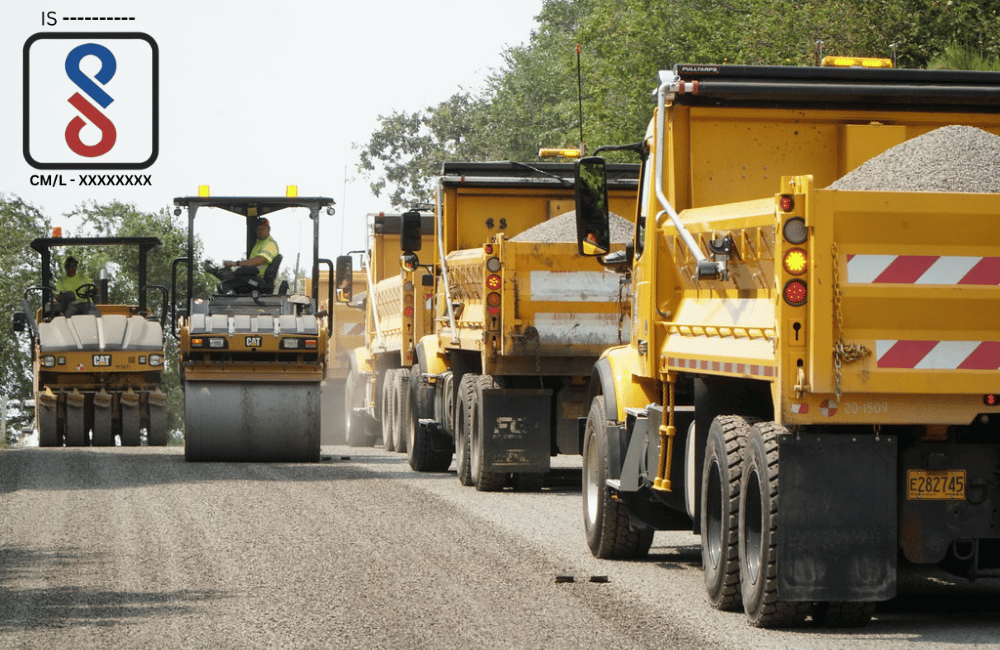
Products covered by Scheme X must have BIS certification from the Bureau of Indian Standards (BIS). The BIS Standard Mark, also known as the BIS Scheme X Certification Mark, has the standard number at the top of the mark and the product's license number, "CM/L-XXXXXXXXXX," at the bottom.
The Bureau of Indian Standards only issues this mark upon the successful issuance of a BIS licence. Each manufacturer is required to promote their product with a valid BIS Mark and adhere to the Indian Standards regulations.
Marking any product with the license number "CM/L-XXXXXXXXXXXX" and selling it in the Indian consumer market without a BIS licence is illegal.
Guidelines for Using the BIS Standard Mark
- Display of the Standard Mark: The Standard Mark must be shown on the product, its packaging, or both. It can be in black & white or colored, as approved by BIS. The mark should always be clear and easy to read.
- License Number and References: The Mark shall carry the license no (CM/L-XXXXXXXXXX) and reference to the relevant standard(s) as per the license conditions.
- Certificate of Conformity (CoC): The CoC number must be present on the packaging or the product itself for which the certificate has been issued. A copy of the CoC should also be provided with the product.
- Product-Specific Labelling Requirements: BIS may introduce some extra marking or labeling requirements for certain products. Manufacturers must follow these specific rules in addition to general guidelines.
- When Physical Marking Isn’t Possible: When It’s Not Possible to Physically Mark: When it is impossible to physically print the marking on the product or packaging, it shall be printed in the test certificate delivered with the product.
- Product Information: Every detail related to the product, such as type, variety, ID number, manufacturing date/week, brand name, trademark and the address of the manufacturer, should be clearly visible on the product packaging or the label attached to it.
- When Physical Marking is Not Feasible: If the Standard Mark cannot be physically applied to the product or packaging, it must be included on the test certificate accompanying the product.
- Product Information: The product should be labeled with Type and variety, Identification number, Manufacturing date or week, Brand name and trademark, Complete address of the manufacturer.
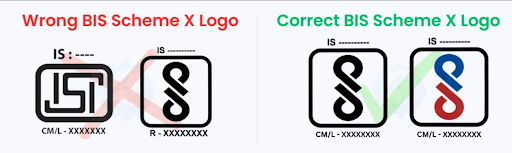
These details should be marked on the product, packaging, or both, or included on a label attached to the product.
Key Differences Between Scheme-I & Scheme-X
Scheme I
Scheme I cover a broad variety of consumer goods, such as industrial materials, home appliances, and electronics.
- The products must have an ISI mark, which is a standard mark.
- Both domestic and foreign manufacturers are covered.
- Through sample testing and factory inspection, the certification procedure guarantees quality.
Scheme X
- This scheme focusses on high-risk industrial products, such as heavy machinery, electrical safety devices, and unique industrial products.
- This program has a strict certification procedure that includes extensive inspections and detailed reporting.
- The greater certification fee in comparison to Scheme I is explained by the surcharge for extra compliance criteria.
You are covered by Scheme-X if your company deals with industrial machinery and electric equipment.
Types of Products Fall Under Scheme-X
Learn about the different items that Scheme-X covers. This program is intended for high-risk items, such as low voltage switchgear and controlgear:
- Power supply units, high voltage equipment, and industrial transformers are examples of electrical equipment.
- Automation equipment, industrial cranes, and hydraulic presses are examples of heavy machinery.
- Emergency electrical systems, pressure vessels, and fire extinguishers are examples of safety equipment.
- Medical-grade electrical appliances with notable safety measures are classified as specialised consumer electronics.
Before beginning production or sales in India, it is crucial for manufacturers whose products fall under any of the aforementioned categories to receive Scheme-X certification.
Products Covered Under Scheme-X
According to the Ministry of Heavy Industries, the following types of low-voltage switchgear and controlgear are on the list of products that must have BIS certification under Scheme X.
| Sr No. | Indian Standards | Title of Standard | Product category | Specific Requirement |
|---|---|---|---|---|
| 1 | 2 | 3 | 4 | 5 |
| 1.1 (a) | IS/IEC 60947: Part 2:2016 | Low-Voltage switchgear and control gear: Part 2 circuit- Breaker (First Revision) | AC Circuit – Breakers (Category A) – All rating upto 630 A, upto 440V AC | All test as per IS/IEC 60947: Part 2: 2016 except the test listed below in Sr. No. 1.1.(b) of this table |
| 1.1 (b) | AC Circuit – Breakers (Category A) – All rating upto 630 A, upto 440V AC | Electromagnetic compatibility (EMC) mentioned in Anne J and All test specified for specific application as mentioned in the Annexure(s) of the IS/IEC 60947 : Part 2: 2016 | ||
| 1.2 (a) | AC Circuit – Breakers (Category A) – All rating above 630 A, upto 440V AC | All test as per IS/IEC 60947: Part 2: 2016 except the test listed below in Sr. No. 1.2.(b) of this table | ||
| 1.2 (b) | AC Circuit – Breakers (Category A) – All rating above 630 A, upto 440V AC | Electromagnetic compatibility (EMC) mentioned in Anne J and All test specified for specific application as mentioned in the Annexure(s) of the IS/IEC 60947 : Part 2: 2016 | ||
| 1.3 (a) | AC Circuit – Breakers (Category B)- All rating upto 2000 A, upto 440V AC | All test as per IS/IEC 60947: Part 2: 2016 except the test listed below in Sr. No. 1.3.(b) of this table | ||
| 1.3 (b) | AC Circuit – Breakers (Category B)- All rating upto 2000 A, upto 440V AC | Electromagnetic compatibility (EMC) mentioned in Anne J and All test specified for specific application as mentioned in the Annexure(s) of the IS/IEC 60947 : Part 2: 2016 | ||
| 1.4 | AC Circuit – Breakers (Category A) – All rating above 440V AC | All test as per IS/IEC 60947: Part 2: 2016 | ||
| 1.5 | AC Circuit – Breakers (Category B)- rating above 2000 A, upto 440V AC | |||
| 1.6 | AC Circuit – Breakers (Category B)- All rating above 440V AC | |||
| 1.7 | DC Circuit – Breaker (Category A) – All rating | |||
| 1.8 | AC Circuit – Breaker (Category B)- All rating | |||
| 2 | IS/IEC 60947: Part 3:2012 | Low-Voltage switchgear and control gear: Part 3 switches, disconnectors, switch disconnectors and fuse – Combination units | All types of product ratings | All test as per IS/IEC 60947: Part 3: 2012 |
| 3 | IS/IEC 60947: Part 4: Sec 1: 2012 | Low-Voltage switchgear and control gear: Part 4 contactors and motor – Starters: Sec 1 electromechanical contactors and motor – Starters (First Revision) | All test as per IS/IEC 60947: Part 4: Sec 1: 2012 | |
| 4 | IS/IEC 60947: Part 4: Sec 2: 2011 | Low-Voltage switchgear and control gear: Part 4 contactors and motor – Starters: Sec 2 a.c. semiconductor motor controllers and starters (First Revision) | All test as per IS/IEC 60947: Part 4: Sec 2: 2011 | |
| 5 | IS/IEC 60947: Part 4: Sec 3: 2014 | Low-Voltage switchgear and control gear: Part 4 contactors and motor – Starters: Sec 3 a.c. semiconductor motor controllers and contactors for non – Motor loads ( Second Revision) | All test as per IS/IEC 60947: Part 4: Sec 3: 2014 | |
| 6 | IS/IEC 60947: Part 5: Sec 1: 2009 | Low-Voltage switchgear and control gear: Part 5 control circuit devices and switching elements: Sec 1 electromechanical control circuit devices ( First Revision) | All test as per IS/IEC 60947: Part 5: Sec 1: 2009 | |
| 7 | IS/IEC 60947: Part 5: Sec 2: 2007 | Low-Voltage switchgear and control gear: Part 5 control circuit devices and switching elements: Sec 2 proximity switches | All test as per IS/IEC 60947: Part 5: Sec 2: 2007 | |
| 8 | IS/IEC 60947: Part 5: Sec 5: 2016 | Low-Voltage switchgear and control gear: Part 5 control circuit devices and switching elements: Sec 5 electrical emergency stop devices with mechanical latching function | All test as per IS/IEC 60947: Part 5: Sec 5: 2016 |
Machinery and Electrical Equipment covered under Omnibus Technical Regulation
| Sr No. | Description of Machinery and Electrical Equipment | HS Code |
| 1 | All types of Pumps for handling liquids, liquid elevators and (or) their assemblies /sub-assemblies/components | 841340, 841350, 841360, 841370, 841381, 841382 841391 and 841392. |
| 2 | All types of compressors and (or) their assemblies /sub-assemblies/components | 841430, 841440, 84148011, 84148090, 84149011,84149019, 84149040 and 84149090. |
| 3 | All types of machinery for treatment of material by a process involving a change of temperature and/or their assemblies /sub-assemblies/components | 841932, 841939,841940, 841950, 841960,841981, 841989 and 84199090. |
| 4 | All types of centrifuges, filtering or purifying machinery for liquid and gas and/or their assemblies /sub-assemblies/components | 842111, 842112, 842119, 84212110, 84212190, 842122, 842129, 842131, 842139, 842191 and 842199. |
| 5 | All types of machinery for filling, closing, sealing, labeling bottles, packing or wrapping and/or their assemblies /sub-assemblies/components | 842220, 842230, 842240 and 842290. |
| 6 | All types of cranes and (or) their assemblies /sub-assemblies/components | 842611, 842612,842619, 842620, 842630,842641, 842649, 842691 and 84269990. |
| 7 | All types of machinery for construction, earthmoving, Mining and (or) their assemblies /subassemblies/components | 8429, 843010, 843020, 843031, 843039, 843041, 843049, 843050, 843141, 843142, 843143 and 843149. |
| 8 | All types of weaving machines (looms) and (or) their assemblies /sub-assemblies /components. | 8446, 844811, 844819, 844842 and 844849. |
| 9 | All types of machinery for making embroidery and (or) their assemblies /sub-assemblies /components. | 84479020 and 844859. |
| 10 | All types of metal cutting machines tools covered under the heading 8456 to 8461 and (or) their assemblies /sub-assemblies/components | 8456, 8457, 8458, 8459, 8460, 8461 and 846693. |
| 11 | All types of machine tools for working stone, ceramics, concrete, asbestos cement or like mineral (or) and their assemblies /subassemblies /components. | 8464 and 84669100. |
| 12 | All types of machinery for working rubber and plastics and (or) their assemblies /sub-assemblies /components | 8477. |
| 13 | All types of Machines including the machines for public works & building and the machinery & mechanical appliances having individual functions, not specified Or included elsewhere in Chapter 84 and(or) their assemblies/subassemblies /components | 84791000, 84798999 and 84799090. |
| 14 | All types of gears and gearing, toothed wheels, chain sprocket, transmission elements ball or roller screws, gear boxes and speed changers, including torque converters And (or) their assemblies /sub-assemblies /components | 84834000 and 84839000. |
| 15 | All types of Rotary electrical machines such as Generator, etc and (or) their assemblies /sub-assemblies /components. | 8501 and 8503. |
| 16 | All types of Diesel Generator and (or) their assemblies /sub-assemblies /components. | 8502 and 8503. |
| 17 | All types of Transformers and (or) their assemblies /sub-assemblies /components. | 850421, 850422,850423, 850431, 850432,850433, 850434 and 850490. |
| 18 | All types of Power Semiconductor Converter and (or) their assemblies /sub-assemblies /components. | 850440 |
| 19 | All types of switch gear and control gear equipment operating at voltages not exceeding 1000 volts and (or) their assemblies /sub-assemblies /components. | 8536, 8537 and 8538. |
| 20 | All types of switch gear and control gear equipment operating at voltages exceeding 1000 volts and (or) their assemblies /sub-assemblies /components. | 8535, 8537 and 8538. |
Safety Standards Under BIS Scheme-X
The BIS Scheme-X accreditation ensures both quality and safety. The following are the fundamental safety requirements that manufacturers must meet:
- Observing IEC regulations to prevent hazards like electrical failures and short circuits.
- Modern materials, the dependability of industrial machinery, and thorough testing of the main structure are all covered by mechanical safety.
- Two components of fire safety are the use of fire-retardant building materials and ensuring that they successfully prevent flames from spreading.
- Environmental compliance is the controlled use of energy and the production of environmentally acceptable goods by the industrial process.
- Quality management is the continuous examination of machinery to make sure it conforms with set standards and regulations, regulating processes and manufacturing environments.
Conform to the corresponding Indian Standards, as applicable, as given below :
- IS 16819:2018 and ISO 12100:2010 (Safety of Machinery General Principles for Design-Risk Assessment and Risk Reduction) are examples of type A standards.
- Type B standards: in accordance with the OTR order's Second Schedule
- Type C Standards: in accordance with the OTR order's Third Schedule
Low-Voltage Switchgear and Controlgear (many sections/parts) IS/IEC 60947 To ensure that certified products adhere to regulations and protect end users' interests, manufacturers must adhere to safety standards.
Documentation for BIS Scheme-X Certification
To obtain BIS registration for Machinery and Electricals under Scheme X (Schedule II), manufacturers must submit certain documents.
Prior Registration:
Manufacturers should submit certain information in the course of registration:
| Sr No. | Required Document | Details |
|---|---|---|
| 1 | Name, Address (Factory & Office) | Manufacturer's registered name and complete address of both factory and office. |
| 2 | PAN, GST details | Permanent Account Number (PAN) and Goods and Services Tax (GST) registration details. |
| 3 | Contact details | Email, phone number, and office contact number of the manufacturer. |
| 4 | Details of the management and authorized person | Names and designations of key management personnel and authorized signatory. |
| 5 | Details of the machinery and electrical equipment to be registered | Equipment details as per the First Schedule of the OTR. |
| 6 | Name/type and variety of products | Specific name, type, and variety of products for which BIS certification is sought. |
Registration: The organisers informed that the registration will be done online on the official portal of BIS, Manak Online. (1) This portal serves as the exclusive registration gateway for the applications for registration under the OTR.
Steps to Get Certified Under Scheme-X
The processes to obtain BIS certification under Scheme-X are as follows:
- Check Applicability - Find out if your product is covered by Scheme-X and complies with BIS safety regulations.
- Create the following documents – factory layout, product specifications, test reports, and business registration.
- Technical File Creation – The product and technical file are accompanied by a compliance report that shows the product has been statistically verified to fulfil the required standards.Product details, manufacturing process details, compliance documents, product scope, quality check documents, and other pertinent information proving traceability should all be included in the technical file. Testing, raw materials, subcontract agreements, and test records should be supplied if necessary.
- Application Submission - The required fee is paid and the application is submitted via theBIS portal.
- Factory Inspection – For domestic manufacturers, the inspection duration is two days; for foreign manufacturers, it is three days. If there are any more requests, more days will be needed. During the visit, BIS representatives closely observe the manufacturing processes and quality control systems in use, examine the technical file, observe testing, look for non-conformities or offer guidance, and report to the applicant. All findings are reported following the audit.
- Sample Testing – When a test is outsourced, it is either carried out at the manufacturer's site or by laboratories that have earned BIS accreditation.
- Certification Issuance – After meeting the requirements, BIS issues a licence allowing the use of the BIS mark.
Therefore, by following the relevant international standards, these measures guarantee that certifications are regularly earned.
Procedure of BIS Scheme-X Certification
The BIS Scheme-X certification process applies to both domestic and foreign manufacturers.
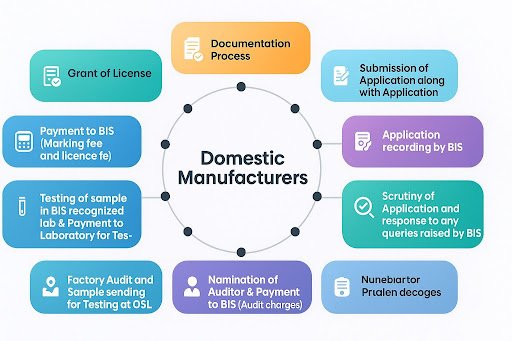
How Domestic Manufacturers Get Licenses
For the domestic manufacturers listed below, the following actions will be taken:
- Prepare all required documents for certification.
- Application submission and payment of the application fee.
- BIS recording of applications.
- Examining the application and answering any questions BIS may have
- Auditor nomination and BIS payment (audit charges)
- Sending samples for OSL testing and conducting a factory audit.
- Sample testing in a facility accredited by BIS and payment to the laboratory for testing (subcontracted facilities may vary).
- Payment to BIS (licensing and marking fees).
According to BIS practice, the general timeline for granting a licence is approximately ninety working days.
Procedure for grant of Licence for Foreign Manufacturers
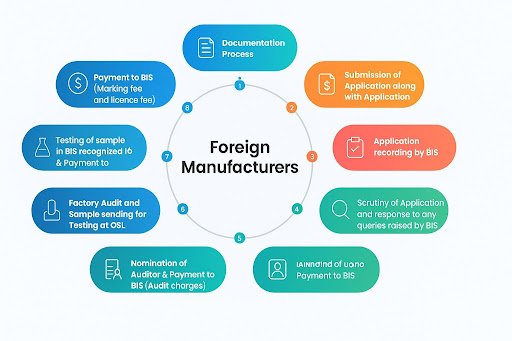
For the foreign manufacturers listed below, the following actions will be taken:
- Preparation of documents
- Application submission and payment of the application fee
- BIS recording of applications
- Examining the application and answering any questions BIS may have
- Auditor nomination and BIS payment (audit charges)
- Preparing for the audit (including making travel, hotel, and visa arrangements).
- Sending samples for OSL testing and conducting a factory audit
- Sample testing in a facility accredited by BIS and payment to the laboratory for testing (subcontracted facilities may vary).
- Payment to BIS (licensing and marking fees)
- General Timeline for License Grant: Approximately six to seven months, depending on current procedures.
General Timeline: 6-7 months, depending on current procedures.
KEY ADDITIONAL POINTERS FOR BIS SCHEME X CERTIFICATION
- Extra Advice For International Manufacturers:
- Regardless of their actual operational scale, all foreign producers are categorised as "Large Scale" under FMCS standards.
- To serve as a liaison for the management and upkeep of the BIS licence, foreign producers are required to designate an AIR (Authorised Indian Representative).
- For international producers, factory audits entail on-site inspections and sample testing at labs accredited by BIS. These audits usually take three days, plus extra man-days for each additional application.
BIS Scheme-X Certification Fee
Manufacturers are required to follow the defined pricing structure in order to streamline the certification procedure. The Bureau has announced the following fee schedule in accordance with Schedule-II, Scheme-X, Paragraph 5 of the Bureau of Indian Standards (Conformity Assessment) Regulations, 2018. Products or product categories for which no separate cost has been expressly announced will be covered by this announcement.
| Sr No. | Types of Fees / Charges | Amount |
| 1 | Application Fee for Grant of License | ₹2,000 |
| 2 | Application Fee for Certificate of Conformity | ₹2,000 |
| 3 | Certification Fee for License Grant or Renewal | ₹25,000 per year |
| 4 | Certification Fee for Certificate of Conformity | ₹10,000 |
| 5 | Technical File Review Fee (for license, certificate, or scope changes) | ₹20,000 per technical file |
| 6 | Inspection Fees (Including Surveillance) | ₹20,000 per man-day |
| 7 | Sample Procurement Charges | Based on actual costs |
| 8 | Testing Charges | Based on actual costs |
Validity and Renewal Process of Scheme-X Certificate
- Validity and Renewal of Licenses: Continuous production licenses are granted for three to six years, with the opportunity to extend them for an additional period of time.
- Certificate of Conformity (CoC): Applicable to both local and foreign producers, it is issued for one-time production and has no opportunity to be renewed.
- Product Test reports: BIS officials will employ witness testing during the plant visit to confirm test results if they come from the manufacturer's internal lab. In-house testing facilities that are subcontracted will also be examined.
For their products to remain compliant and approved, manufacturers must adhere to the Scheme-X certification procedure. In accordance with Regulation 8 of the relevant laws, the Bureau of Indian Standards (BIS) will examine the application and grant a renewable licence using Form-VIII.
Conclusion
To guarantee the quality and safety of low voltage switchgear, control gear, machinery, and electrical equipment, BIS Scheme X Certification is necessary. Scheme X enables the business to meet stringent Indian standards while streamlining the production process.
For machine tools used in the production of stone, ceramic, concrete, asbestos cement, and mineral glass goods, BIS Scheme-X certification is required. In addition to guaranteeing product dependability, adherence to this rule boosts consumer trust in certified companies.
To make the difficult certification procedure easier, get in touch with EVTL India, a top BIS Scheme-X certification consultant. EVTL India has been a reliable manufacturer partner in India for more than 16 years as a BIS consultant. EVTL India provides producers and importers with extensive help because of its extensive experience in product testing, inspection, and regulatory compliance.
Contact EVTL India for help with BIS Scheme-X certification, including documentation,testing, and application processing.
Frequently Asked Questions (FAQ)
Our Services
For our EPR Registration, EVTL India provided outstanding support. They helped us understand the requirements and ensured timely compliance. Their efficiency made the process hassle-free, and we’re now fully compliant with the regulations."*

Atul Singh
Product SpecialistEVTL India made ISI certification easy and stress-free. Their expert guidance and thorough handling of the documentation helped us get certified on time. The process was smooth, and we are very satisfied with their service.

Vishal Vikram Singh
Sr Manager – RegulatoryEVTL India’s team provides exceptional support as a BIS Certification consultant. Their professionalism and in-depth knowledge of regulatory standards saves time and ensured a fast and efficient certification process.

Terutaka Ogawa
Country HeadThanks to EVTL India, we quickly obtained an ISI Mark Certificate. Their team’s expertise and attention to detail ensured that we met all requirements smoothly. Highly recommend their services!

Pankaj Gupta
Q&R Lead- IndiaEVTL India stands out as a top BIS consultant in India. Their expertise and proactive approach make navigating regulatory compliance seamless, ensuring every project meets the highest standards. I highly recommend them for compliance needs in India.Shrek Li, Regulatory Compliance Expert, China

Shrek Li
Account DirectorGot my ISI mark certification done at EVTL India along with CRS for my IT product. EVTL also provided my company rn enterprises with inhouse lab setup at my manufacturing unit.

RN Enterprises
We had an excellent experience with EVTL for ISI certification. The entire process was smooth and hassle-free. Their team was supportive and very professional and kept us updated throughout. Highly recommend their services!!
Mehandru Casting pvt ltd
I would like to express my gratitude to Divyanshu Sir for his invaluable support with the BIS ISI registration of electric Toy. We truly appreciate your assistance and will certainly recommend your services.
Shksham Yadav
I took their service for baby category for both electric and non electric they did a smooth job getting me the BIS certificate with out any problem.
hemanth sai Bussetti
They have provided us with great service, getting our ISI certification done hassle free. For our POV Domestic Ro systems. Thanks EVTL India Family. great work
Mr. Chudmunge
We have try more vendor for ISI mark certificate but EVTL india is best support team and earlier time get the license. Thanks Evtl India family
Sandeep singh
News & Updates