Get A Quote
Trademark Registration
Looking to register your trademark? You've come to the right place! EVTL India, a leading consultancy in regulatory compliance solutions, offers seamless trademark registration services for businesses and products across India. Protect your brand and ensure hassle-free registration with our expert guidance. Trust EVTL India for all your regulatory needs!

- Overview
- Who Can Apply for Trademark Registration Online?
- Types of Trademark Registrations in India
- Choosing the Correct Trademark Class
- Trademark Search
- Required Documents & Details for Online Trademark Registration
- Process
- Trademark Objections and Opposition
- Trademark Renewal
- Conclusion
- Frequently Asked Question (FAQ)
Trademark Registration- Overview
Trademark registration in India is a legal process that allows businesses and individuals to protect their unique brand identity by securing exclusive rights over their trademarks. In a competitive market, a trademark serves as a unique identifier for your products or services, distinguishing them from competitors.
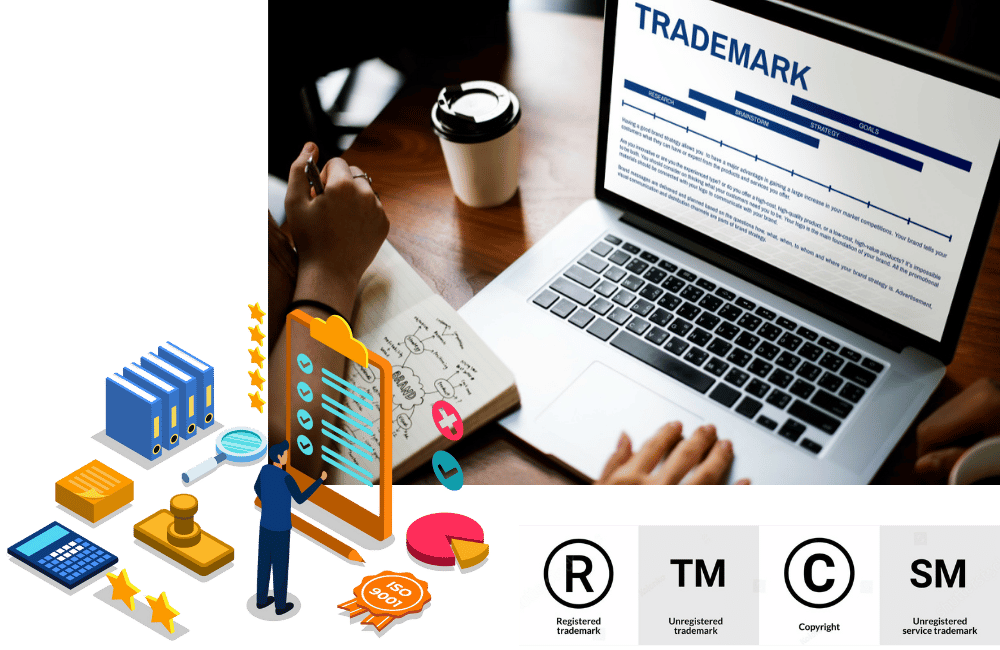
A trademark can be a symbol, word, logo, or combination of these elements that distinguishes the goods or services of one entity from others in the market. With the rise of online businesses and globalization, the importance of trademark registration has become more evident than ever. By registering a trademark, businesses can build and safeguard their brand identity, creating trust with consumers and strengthening their market position. The objective of the Trade Marks Act, 1999, is to provide robust protection for trademarks in India, ensuring that businesses can protect their brands from competitors and unauthorized use.
The registration is governed by the Trade Marks Act, 1999, which is administered by the Trade Marks Registry, originally established in 1940. The Registry acts as a resource and information center, facilitating trademark-related matters. Its main function is to register trademarks that qualify under the Act and Rules, ensuring better protection for goods and services and preventing fraudulent use of marks. Once registered, a trademark provides legal protection against infringement, allowing the owner to take action against unauthorized use or imitation. In this guide, we will explore who can apply for a trademark, the different types of trademarks available in India, the registration process, and the benefits of trademark protection.
Who Can Apply for Trademark Registration Online?
In India, trademark registration is accessible to a broad spectrum of individuals and organizations. The following entities are eligible to apply for trademark registration online:
This inclusiveness allows various entities to protect their brand identities and intellectual property in India.
Types of Trademark Registrations in India
India offers several types of trademark registrations tailored to different business needs. Understanding the various options is essential to choosing the right type of registration. Here are the key types:
- Product Mark: A product mark is used to identify the source of physical goods. It protects products in categories related to tangible commodities, such as food, clothing, and electronics. These trademarks fall under Classes 1-34 in the trademark classification system.
- Service Mark: A service mark is used for services rather than physical goods. It distinguishes service providers from their competitors. Common examples include legal, financial, and entertainment services, classified under Classes 35-45.
- Collective Mark: A collective mark represents a group or association that offers specific products or services. It helps individuals or businesses within a collective body protect their brand. Examples include cooperatives, unions, or associations.
- Certification Mark: A certification mark is issued to signify that a product meets specific standards concerning quality, origin, or composition. Certification marks are typically found in packaged goods, electronics, and products that adhere to industry standards.
- Shape Mark: A shape mark protects the unique shape of a product. For instance, the shape of a perfume bottle or a distinctive packaging design can be trademarked if it is identifiable with a specific manufacturer.
- Pattern Mark: A pattern mark covers distinctive patterns used on products, such as fabric designs or textures. To qualify, these patterns must stand out as unique identifiers of the brand.
- Sound Mark: A sound mark protects specific sounds associated with a brand, like jingles or musical notes used in advertisements. For example, the iconic tune of the Indian Premier League (IPL) is a sound mark.
Each type of trademark provides businesses with the flexibility to safeguard different aspects of their brand.
Choosing the Correct Trademark Class
The classification of goods and services is vital in the trademark registration process. Trademarks in India are categorized into 45 classes:
Classes 1-34: Pertains to goods (e.g., clothing, electronics, chemicals).
Classes 35-45: Relates to services (e.g., advertising, entertainment, education).
Selecting the correct class is essential to ensuring the validity of your trademark. If your business operates in multiple areas, you may need to apply in more than one class.
Commonly used classes include:
- Class 9: Computer software and electronics.
- Class 25: Clothing and apparel.
- Class 35: Advertising and business management services.
- Class 41: and educational services.
A thorough understanding of trademark classes ensures comprehensive protection for your business across different sectors.
Trademark Search
Before applying for trademark registration, conducting a trademark search is crucial. A trademark search helps identify whether a similar or identical mark already exists in the market. The search is typically conducted using the brand name and the applicable class of goods or services. This process prevents legal conflicts and ensures that your chosen mark is unique and eligible for registration.
Several online tools are available to assist with the search process, including government databases and services provided by trademark registration agencies.
Required Documents & Details for Online Trademark Registration
To begin the trademark registration process in India, the following details and documents are required:
Applicant's Name: The full name of the individual or entity applying for the trademark.
Business Type: The type of business entity (e.g., sole proprietorship, LLP, partnership firm).
Business Objectives: A brief description of the business's activities.
Brand/Logo/Slogan Name: The name, logo, or slogan intended for trademark registration.
Registration Address: The official address of the business or individual applying for the trademark.
These details help streamline the application process and ensure the accurate filing of the trademark.
The Trademark Filing Process in India
The trademark registration process in India begins with a search to ensure the mark is unique and not already in use. Once the trademark search is complete, the next step is filing the trademark registration application with the Trademark Registrar. Here’s a step-by-step overview of the process:

Step-1: Vienna Codification: After submitting the application, the Vienna Classification system is applied to categorize any figurative elements of the trademark, such as logos or images.

Step-2: Examination: The Trademark Registrar examines the application for accuracy and potential conflicts. A trademark examination report is generated, which may accept or raise objections to the application.

Step 3: Trademark Journal Publication: If no objections arise, the trademark is published in the Trademark Journal. The public has 90 days to object if they believe the trademark conflicts with their interests.

Step 4: Trademark Hearing: If an objection is filed, a trademark hearing will be held where both parties can present their case. The hearing officer will decide based on the evidence.

Step 5: Registration and Certification: If no objections are raised or they are resolved satisfactorily, the trademark is registered, and a Trademark Registration Certificate is issued. At this point, the trademark owner can use the ® symbol to indicate official registration.
Trademark Objections and Opposition
During the registration process, trademark objections or opposition may occur:
Trademark Objection: The Registrar may request further clarification or changes to the trademark. These objections must be addressed promptly to proceed with the registration.
Trademark Opposition: Third parties can file objections if they believe that the trademark infringes on their rights. The opposition process includes hearings and legal submissions.
Trademark Renewal
A registered trademark in India is valid for ten years. To maintain protection, the trademark must be renewed every ten years. Failing to renew the trademark can result in the loss of exclusive rights, leaving your brand vulnerable to misuse or infringement.
Conclusion:
By registering a trademark, you secure the legal rights to your brand, ensuring that it remains a valuable asset to your business. Whether you're an individual, a company, or an organization, trademark registration is an essential step in protecting your brand identity in a competitive marketplace.
EVTL India, a leading certification consultancy, ensures a hassle-free process for obtaining trademark registration. Our expert team offers round-the-clock consultation, guiding you through every step to meet regulatory compliance requirements efficiently. Trust EVTL India for seamless trademark registration and comprehensive compliance solutions tailored to your needs.
Frequently Asked Questions (FAQ)
Our Services
For our EPR Registration, EVTL India provided outstanding support. They helped us understand the requirements and ensured timely compliance. Their efficiency made the process hassle-free, and we’re now fully compliant with the regulations."*

Atul Singh
Product SpecialistEVTL India made ISI certification easy and stress-free. Their expert guidance and thorough handling of the documentation helped us get certified on time. The process was smooth, and we are very satisfied with their service.

Vishal Vikram Singh
Sr Manager – RegulatoryEVTL India’s team provides exceptional support as a BIS Certification consultant. Their professionalism and in-depth knowledge of regulatory standards saves time and ensured a fast and efficient certification process.

Terutaka Ogawa
Country HeadThanks to EVTL India, we quickly obtained an ISI Mark Certificate. Their team’s expertise and attention to detail ensured that we met all requirements smoothly. Highly recommend their services!

Pankaj Gupta
Q&R Lead- IndiaEVTL India stands out as a top BIS consultant in India. Their expertise and proactive approach make navigating regulatory compliance seamless, ensuring every project meets the highest standards. I highly recommend them for compliance needs in India.Shrek Li, Regulatory Compliance Expert, China

Shrek Li
Account DirectorGot my ISI mark certification done at EVTL India along with CRS for my IT product. EVTL also provided my company rn enterprises with inhouse lab setup at my manufacturing unit.

RN Enterprises
We had an excellent experience with EVTL for ISI certification. The entire process was smooth and hassle-free. Their team was supportive and very professional and kept us updated throughout. Highly recommend their services!!
Mehandru Casting pvt ltd
I would like to express my gratitude to Divyanshu Sir for his invaluable support with the BIS ISI registration of electric Toy. We truly appreciate your assistance and will certainly recommend your services.
Shksham Yadav
I took their service for baby category for both electric and non electric they did a smooth job getting me the BIS certificate with out any problem.
hemanth sai Bussetti
They have provided us with great service, getting our ISI certification done hassle free. For our POV Domestic Ro systems. Thanks EVTL India Family. great work
Mr. Chudmunge
We have try more vendor for ISI mark certificate but EVTL india is best support team and earlier time get the license. Thanks Evtl India family
Sandeep singh
News & Updates