Get A Quote
MD-42 License Registration
The MD-42 License is the formal wholesale licence issued by the State Licensing Authority under the Medical Devices Rules, 2017 to businesses intending to stock, exhibit, or distribute medical devices in India. It is granted after the applicant submits Form MD-41 and demonstrates adequate premises, qualified technical staff, and proper record-keeping systems.

The licence ensures that medical device traders maintain safe storage conditions and comply with regulatory requirements throughout the supply chain. Without a valid MD-42 licence, wholesale dealing in notified medical devices is not permitted in India. Proper documentation and compliance help ensure smooth and timely approval.
What is the MD-42 License?
The MD-42 License is an official wholesale authorization issued by the State Licensing Authority under the Medical Devices Rules, 2017. It permits eligible businesses in India to stock, exhibit, and distribute notified medical devices in the supply chain. The licence is granted after submission of Form MD-41 and verification of the applicant’s premises, storage facilities, qualified technical staff, and record-keeping systems. Its purpose is to ensure that medical devices are handled safely and maintained in proper conditions during distribution. Any entity intending to conduct wholesale trade of regulated medical devices must obtain a valid MD-42 licence before commencing operations in India.
Who Requires an MD-42 Registration?
MD-42 registration is required for entities that plan to handle the wholesale trade of notified medical devices in India. It applies to businesses involved in bulk storage and supply within the regulated medical device distribution network.
Key Points:
- Medical device wholesalers and bulk distributors
- Importers supplying devices through warehouses in India.
- Stockists and supply chain partners dealing in notified devices.
- Dealers operating medical device distribution hubs.
- Businesses supplying devices to hospitals, clinics, or retailers.
- Companies, LLPs, partnerships, and proprietorship firms involved in wholesale trade.
Without MD-42 approval, such entities cannot legally conduct wholesale distribution of notified medical devices.
Step-by-Step Medical Device Trader Registration Process (MD-41 & MD-42)
Medical Device Trader Registration is a mandatory requirement for businesses engaged in the wholesale distribution of medical devices in India. This license is issued by the State Licensing Authority under the Medical Devices Rules, 2017 and ensures that traders maintain proper storage conditions, documentation, and quality compliance.
If you are planning to obtain a Medical Device Wholesale License, following a clear and well-prepared process can help you avoid delays and approvals issues. Below is the process explained in a simple and practical way.
Step 1: Application Submission Through CDSCO Portal
The registration journey begins with submitting the application through the CDSCO online system or the respective State Drug Control Department portal.
At this stage, the applicant needs to:
- Visit the CDSCO or State licensing portal
- Carefully fill out Form MD-41 with accurate business information
- Upload all required documents in the prescribed PDF format (as per size guidelines)
- Ensure that the premises meet the required infrastructure and storage standards
It is very important to double-check the application before submission. Even small errors or missing documents can lead to queries, delays, or rejection during the MD-42 approval stage.
Step 2: Payment of Registration Fee
Once the application is ready, the prescribed government fee must be paid to initiate processing.
- Government fee: ₹3,000 per premises (non-refundable)
- Available payment modes:
- UPI (Unified Payments Interface)
- Net banking
Always keep the payment receipt safely. It will be required during verification and for future reference related to the MD-42 license.
Step 3: Premises Inspection by Drug Inspector
After successful submission of Form MD-41, the concerned Drug Inspector will contact the applicant to schedule a premises inspection.
During the inspection, the authority typically checks:
- Proper storage arrangements for medical devices
- Temperature control systems (if applicable)
- Cleanliness, hygiene, and safety conditions
- Record-keeping and inventory management system
- Availability of qualified technical personnel
This step is crucial because it confirms whether your facility complies with medical device regulatory standards before the wholesale license is granted.
Step 4: Grant of Medical Device Wholesale License (MD-42)
If the application and inspection are found satisfactory, the State Licensing Authority issues the MD-42 License.
After receiving the license, the applicant is legally authorized to:
- Wholesale medical devices
- Stock and distribute notified medical devices
- Supply products within the permitted jurisdiction
Typical timeline: 30–45 days (may vary depending on the state and completeness of the application).
Essential Documents for Medical Device Wholesale License
Preparing documents in advance significantly improves approval speed. Below is the standard documentation checklist.
- Business Documentation
- Duly filled Form MD-41
- Cover letter explaining business intent and scope
- Partnership Deed or Certificate of Incorporation
- GST Registration Certificate
- PAN Card copy
- Proof of registered office address
- Rent agreement (if premises are leased)
- Premises Documentation
- Layout and floor plan of the storage facility
- Interior and exterior photographs of the premises
- Property ownership proof or lease agreement
- Storage facility specifications
- Personnel Documentation
- Educational certificates of competent technical staff
- Experience certificates of key personnel
- Affidavit of appointment of the responsible person
- Professional qualification proof (B.Pharm or Science Graduate)
- Compliance Documentation
- Declaration of regulatory compliance
- Undertaking for maintaining quality of medical devices
- Standard Operating Procedures (SOPs)
- Record-keeping system documentation
Benefits of MD-42 License Registration
Obtaining an MD-42 License provides several advantages for businesses, including:
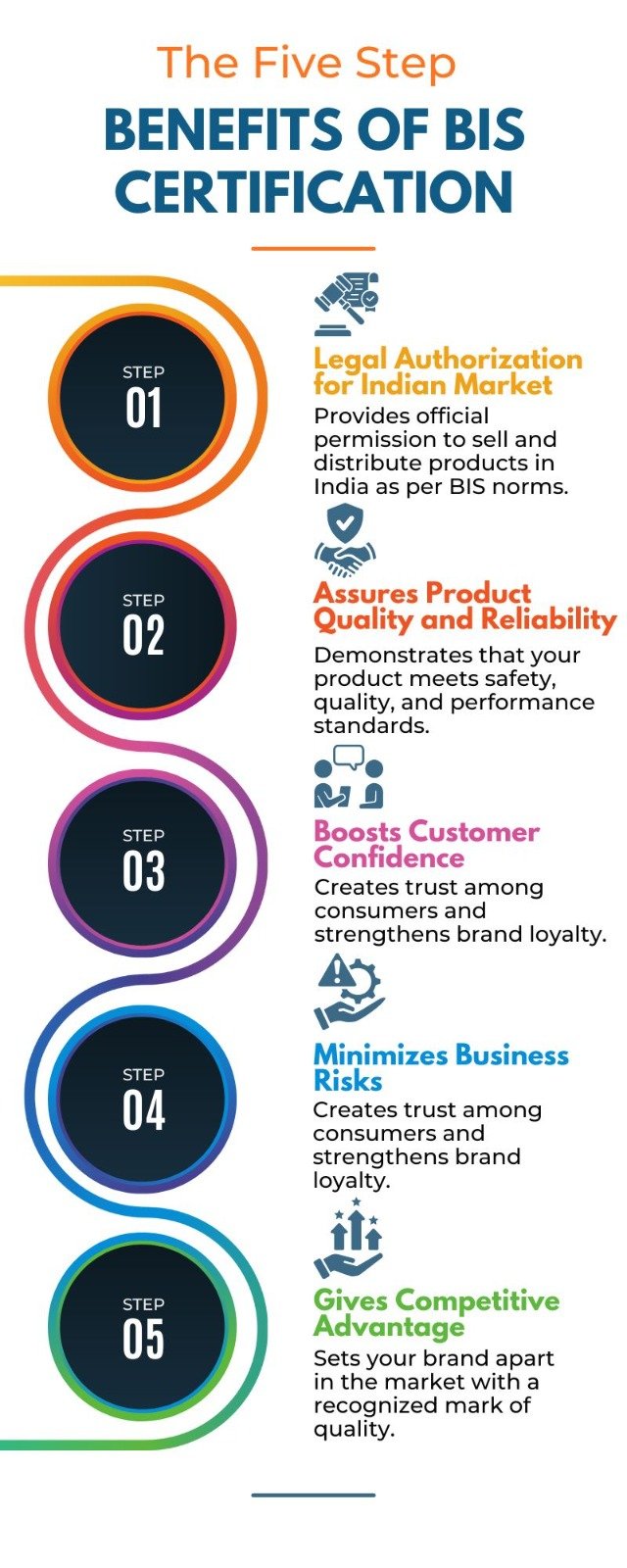
- Legal Compliance: Ensures that your products meet regulatory requirements and can be legally sold in India.
- Consumer Trust: Builds credibility and trust among customers, as the license confirms product safety and quality.
- Market Access: Facilitates smooth entry into the Indian market, reducing the risk of regulatory hurdles.
- Business Expansion: Allows businesses to expand their operations confidently, including exports and collaborations with other certified manufacturers.
Classes of Medical Devices That Require MD-42 License
In India, the import of medical devices is regulated by the Central Drugs Standard Control Organization (CDSCO) under the Medical Devices Rules, 2017. Any medical device notified by the government and intended to be imported into India requires an MD-42 License. The applicability of MD-42 depends on the risk-based classification of the medical device.
Medical devices are classified into four categories – Class A, Class B, Class C, and Class D. Each class represents a different level of risk to patients and determines the regulatory requirements, documentation, and scrutiny level for MD-42 approval.
| Medical Device Class | Risk Level | MD-42 License Requirement | Examples of Medical Devices |
|---|---|---|---|
| Class A | Low Risk | Mandatory for notified devices | Thermometers, surgical gloves, tongue depressors, bandages, stethoscopes |
| Class B | Low to Moderate Risk | Mandatory | Hypodermic needles, infusion sets, suction equipment, blood pressure monitors, sterile syringes |
| Class C | Moderate to High Risk | Mandatory with strict scrutiny | Ventilators, infusion pumps, dialysis machines, orthopedic implants, bone fixation devices |
| Class D | High Risk | Mandatory with highest regulatory control | Heart valves, coronary stents, implantable defibrillators, HIV/Hepatitis IVD kits, life-support systems |
Validity and Renewal of MD-42 License
The MD-42 License, issued by the Central Drugs Standard Control Organization (CDSCO), is typically valid for five years from the date of issuance, subject to retention fee compliance. License holders must apply for renewal before expiry through the CDSCO portal. Timely renewal ensures uninterrupted authorization to sell, stock, or distribute medical devices in India.
- MD-42 License, issued by the Central Drugs Standard Control Organization (CDSCO), does not require traditional renewal.
- License remains valid with timely retention fee payment.
- Retention fees must be paid every five years.
- Non-payment or non-compliance may lead to suspension or cancellation of the license.
Renewal and Retention
Eligibility Criteria for MD-42 License
Before applying for an MD-42 License, businesses must ensure they meet the eligibility requirements. The eligibility criteria are designed to confirm that only qualified and compliant manufacturers or importers can obtain the license. The main criteria include:
- Legally Established Business: The applicant must operate through a valid legal entity such as a proprietorship, partnership, LLP, or company supported by incorporation or registration documents.
- Suitable Storage Premises: The firm must have a dedicated commercial premises with adequate space and appropriate storage arrangements for medical devices.
- Qualified Technical Supervision: A competent technical person—typically a pharmacy or science graduate with relevant experience—must be appointed to oversee handling and distribution activities.
- Regulatory Compliance Systems: The business should maintain proper procedures for inventory control, traceability, and quality maintenance of devices.
- Complete and Accurate Documentation: All required records, declarations, and Form MD-41 must be properly prepared and submitted with the prescribed fee.
Fulfilling these conditions helps ensure faster approval and minimizes the chances of regulatory objections.
Conclusion:
The MD-42 License is a crucial regulatory requirement for businesses engaged in the wholesale distribution of medical devices in India. Issued under the Medical Devices Rules, 2017 by the Central Drugs Standard Control Organization (CDSCO) through the State Licensing Authority, it ensures proper storage, handling, and supply chain compliance. By meeting eligibility criteria, maintaining infrastructure standards, and paying retention fees on time, businesses can operate smoothly and legally. Obtaining and maintaining the MD-42 License not only safeguards regulatory compliance but also strengthens market credibility, operational reliability, and long-term business growth in India’s highly regulated medical device sector.
Our Services
For our EPR Registration, EVTL India provided outstanding support. They helped us understand the requirements and ensured timely compliance. Their efficiency made the process hassle-free, and we’re now fully compliant with the regulations."*

Atul Singh
Product SpecialistEVTL India made ISI certification easy and stress-free. Their expert guidance and thorough handling of the documentation helped us get certified on time. The process was smooth, and we are very satisfied with their service.

Vishal Vikram Singh
Sr Manager – RegulatoryEVTL India’s team provides exceptional support as a BIS Certification consultant. Their professionalism and in-depth knowledge of regulatory standards saves time and ensured a fast and efficient certification process.

Terutaka Ogawa
Country HeadThanks to EVTL India, we quickly obtained an ISI Mark Certificate. Their team’s expertise and attention to detail ensured that we met all requirements smoothly. Highly recommend their services!

Pankaj Gupta
Q&R Lead- IndiaEVTL India stands out as a top BIS consultant in India. Their expertise and proactive approach make navigating regulatory compliance seamless, ensuring every project meets the highest standards. I highly recommend them for compliance needs in India.Shrek Li, Regulatory Compliance Expert, China

Shrek Li
Account DirectorGot my ISI mark certification done at EVTL India along with CRS for my IT product. EVTL also provided my company rn enterprises with inhouse lab setup at my manufacturing unit.

RN Enterprises
We had an excellent experience with EVTL for ISI certification. The entire process was smooth and hassle-free. Their team was supportive and very professional and kept us updated throughout. Highly recommend their services!!
Mehandru Casting pvt ltd
I would like to express my gratitude to Divyanshu Sir for his invaluable support with the BIS ISI registration of electric Toy. We truly appreciate your assistance and will certainly recommend your services.
Shksham Yadav
I took their service for baby category for both electric and non electric they did a smooth job getting me the BIS certificate with out any problem.
hemanth sai Bussetti
They have provided us with great service, getting our ISI certification done hassle free. For our POV Domestic Ro systems. Thanks EVTL India Family. great work
Mr. Chudmunge
We have try more vendor for ISI mark certificate but EVTL india is best support team and earlier time get the license. Thanks Evtl India family
Sandeep singh
News & Updates