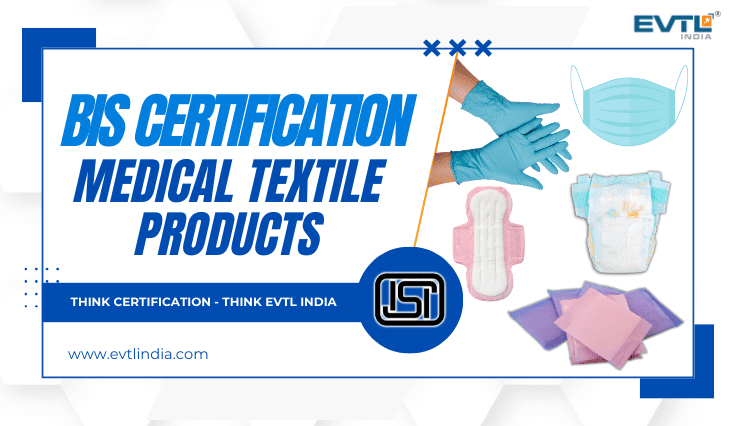
Medical textile
products play a crucial role in safeguarding human health, providing essential
protection and care in both medical and everyday settings. These products
encompass a wide range of items designed to meet specific hygienic and
therapeutic needs. Some of the most common medical
textile products include Baby Diapers, Sanitary Pads and Napkins, Dental
Bibs, Surgical Caps, Surgical Face Masks, Bandages and Adhesive Plasters,
Dressings, Bed sheets and Pillow covers, Shoe Covers and Caps and many more.
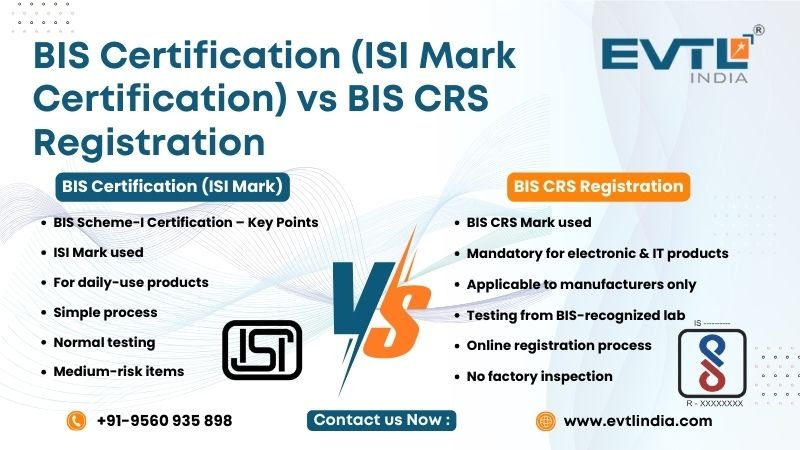
These products are vital in maintaining hygiene, providing therapeutic care, and protecting healthcare providers and patients alike. As they come into direct contact with the human body, ensuring their quality and safety is paramount. This is where the Bureau of Indian Standards (BIS) Certification becomes essential.
What is BIS
Certification?
The Bureau of Indian Standards (BIS) is the
national standards body of India, responsible for developing and enforcing
standards across various industries. Established under the BIS Act 2016, the
organization plays a critical role in maintaining quality and safety standards
for products in the Indian market. BIS certification is a mark of quality and
compliance with the relevant Indian Standards (IS), ensuring that the products
meet safety, performance, and regulatory requirements.
The Ministry of Textiles, issued the Medical Textiles (Quality Control) Order, 2023 to ensure adherence to Indian Standards for specified products. To provide additional time for compliance, the Ministry has issued several extensions, culminating in the Medical Textiles (Quality Control) Amendment Order, 2025. The date of implementation of medical textile QCO is from 1st January 2025.
As per this quality control order, it will be mandatory for these products to have BIS certification to carry the standard ISI mark. BIS certification is important for medical textile products, as these items are directly associated with health and hygiene. The certification process involves rigorous testing and evaluation, ensuring that the products meet the essential quality standards required for safe use in the medical environment.
Importance
of BIS Certification for Medical Textile Products
Given the nature of
medical textiles, where the safety and well-being of individuals are at stake,
ensuring the highest quality standards is non-negotiable. BIS certification
offers the following benefits for manufacturers and consumers alike:
- Ensures Product
Safety: BIS certification guarantees that
medical textile products meet stringent safety standards, reducing the
risk of infections or allergic reactions.
- Enhances Product
Credibility: Products with BIS certification
are recognized as trustworthy and of high quality, giving both healthcare
providers and patients confidence in their use.
- Mandatory Compliance: For certain medical textile products, BIS certification is
mandatory before they can be sold in the Indian market. This ensures that
only products that meet the required safety standards are available to
consumers.
- Prevents Substandard
Products: The certification process involves
detailed testing to weed out substandard or unsafe products, thereby
protecting consumers and improving the overall quality of goods in the
market.
- International
Recognition: BIS certification helps Indian manufacturers
meet international standards, making it easier to export medical textile
products to global markets.
Medical Textile Products Covered by
BIS Certification
Medical textile
products come in various forms, each serving a different purpose. Each of these
standards is designed to ensure that medical textile products meet high
performance and safety criteria, crucial for their application in healthcare
settings. BIS has developed standards for several Indian standards to cover
these medical textile products:
|
S.No. |
Indian
Standard |
Product |
|
1 |
IS 16669: 2017 |
Medical Textiles - Elastic Adhesive Dressing |
|
2 |
IS 16291:2014 | |
3 |
IS 16290:2014 |
Medical Textiles - Knitted Viscose Primary Dressings |
|
4 |
IS 16466:2016 |
Medical Textiles - Providone Iodine Ointment Based
Knitted Dressing |
|
5 |
IS 16468:2016 |
Medical Textiles - Absorbent Cotton (Sterile and
Non-Sterile) |
|
6 |
IS 16470:2016 |
Medical Textiles - Elastic Surgical Adhesive Tapes |
|
7 |
IS 16670:2017 |
Medical Textiles - Absorbent Cotton Ribbon Gauze |
|
8 |
IS 16668:2017 |
Medical Textiles - Salicylic Acid Adhesive Plaster |
|
9 |
IS 16948:2018 |
Medical Textiles - Permeable Nonwoven Surgical Adhesive
Tape |
|
10 |
IS 16950:2018 |
Medical Textiles - Xray Detectable Absorbent Cotton
Gauze |
|
11 |
IS 757:1971 |
Handloom Cotton Lint, Absorbent, Bleached |
|
12 |
IS 758:1988 |
Handloom Cotton Gauze, Absorbent, Non-Sterilized |
|
13 |
IS 863:1988 |
Handloom Cotton Bandage Cloth, Non-Sterilized |
|
14 |
IS 10829:1993 |
Xray Detectable Gauze Swabs and Laparotomy Sponges |
|
15 |
IS 14316:1995 |
Swabs, Small, In Bag Of 50 |
|
16 |
IS 4605:1981 |
Crepe Bandage |
|
17 |
IS 16469:2016 |
Medical Textiles - Open Weave Bandages |
|
18 |
IS 16946:2018 |
Medical Textiles - Elasticated Tubular Bandages |
|
19 |
IS 9751:1981 |
Bandage, Suspensory |
|
20 |
IS 14274:1995 |
Bandage, T Shaped, Calico |
|
21 |
IS 14306:1995 |
Bandage, Triangular, Calico |
|
22 |
IS 4739:1986 |
Zinc Oxide Elastic Self-Adhesive Bandage |
|
23 |
IS 16111:2013 |
Elastic Bandage |
|
24 |
IS 16660:2017 |
Medical Textiles - Non Woven Bandage Rolls |
|
25 |
IS 16302:2014 |
Medical Textiles - Orthopedic Stockinet |
|
26 |
IS 16303:2014 |
Medical Textiles - Cast Padding for Orthopedic
Plaster - Specification |
|
27 |
IS 16467:2016 |
Medical Textiles - Graduated Medical Compression
Stockings |
|
28 |
IS 16671:2017 |
Medical Textiles - Belladonna Adhesive Plaster |
|
29 |
IS 16949:2018 |
Medical Textiles - Adhesive Extension Plaster |
|
30 |
IS 6237:1971 |
Handloom Cotton Cloth for Plaster of Paris Bandages
and Cut Bandage |
|
31 |
IS 4717:1980 |
Zinc Oxide Self - Adhesive Plaster |
|
32 |
IS 4738:1993 |
Bandage, Plaster of Paris |
|
33 |
IS 11163:1985 |
First Aid Dressings |
|
34 |
IS 16289:2014 |
Medical Textiles - Surgical Face Masks |
|
35 |
IS 5405:2019 | Sanitary Napkins |
|
36 |
IS 17334:2019 |
Medical Textiles - Surgical Gowns and Surgical
Drapes |
|
37 |
IS 17348:2020 |
Medical Textiles - Adhesive Incise Drape |
|
38 |
IS 17349:2020 | |
|
39 |
IS 17350:2020 |
Medical Textiles - Abdominal Binder |
|
40 |
IS 17351:2020 |
Medical Textiles - Dressing, Shell Compressed |
|
41 |
IS 17352:2020 |
Medical Textiles - Foam Dressing |
|
42 |
IS 17353:2020 |
Medical Textiles - Pressure Garment |
|
43 |
IS 17354:2020 |
Medical Textiles - Dental Bib/Napkins |
|
44 |
IS 17359:2020 |
Medical Textiles - Anti-Embolic Stocking for Post Op
Use Up to Thigh Medium |
|
45 |
IS 17423:2021 |
Medical Textile – Bio Protective Coveralls |
|
46 |
IS 17506:2020 |
Medical Textiles- Hydrocolloid Dressing |
|
47 |
IS 17507:2020 |
Medical Textile – Cellulose Wading |
|
48 |
IS 17508:2020 |
Disposable Adult Incontinence Diaper |
|
49 |
IS 17509:2021 | |
|
50 |
IS 17514:2021 |
Reusable Sanitary Pad/ Sanitary Napkin/ Period Panties |
|
51 |
IS 17528:2021 |
Medical Textiles - Chlorhexidine Gauze Dressings |
|
52 |
IS 17628:2021 |
Medical Textiles - Eye Pad |
|
53 |
IS 17629:2021 |
Medical Textiles- Caps |
|
54 |
IS 17630:2021 |
Process of BIS Certification for Medical Textile Products
The BIS
certification process for medical textiles involves multiple steps, designed to
thoroughly evaluate a product's compliance with the required standards. Here is
a general overview of the certification process:
1. Application Submission: Manufacturers
must submit an application form along with required documentation to BIS.
2. Documentation Review: BIS reviews the
submitted documents to ensure completeness and correctness.
3. Factory Inspection: BIS officials
conduct an on-site inspection of the manufacturing facility to assess the
production process and quality control measures.
4. Sample Testing: Product samples are
taken and tested in BIS-approved laboratories to verify compliance with Indian
standards.
5. Certification Grant: Upon successful
completion of the inspection and testing, BIS grants certification, allowing
the manufacturer to use the BIS mark on their products.
Documents
Required for BIS Certification
To apply for BIS
certification for medical textile products, manufacturers need to submit the
following documents:
● Application form
● Manufacturing process details
● Quality control plan
● Test reports from BIS-approved
laboratories
● Factory layout and equipment
details
● Proof of business registration
● Product specifications and
technical details
● Declaration of conformity to
Indian standards
Additionally,
manufacturers may be required to provide proof of compliance with environmental
and safety regulations, depending on the specific type of product being
certified.
BIS Certification Cost for
Medical Textile Products
The cost of BIS
certification includes several components:
● Application Fee: A fee for submitting
the application form.
● Audit Fee: Costs associated with the
on-site factory inspection by BIS officials.
● Sample Testing Fee: Expenses for testing
product samples in BIS-approved labs.
● License Fee: A fee for granting the BIS
certification.
● Marking Fee: Costs for using the BIS
mark on certified products.
Additionally,
manufacturers may need to invest in factory facilities, particularly in
installing testing machinery for in-house testing labs to ensure ongoing
compliance with BIS standards.
Challenges
in Obtaining BIS Certification
While BIS
certification is crucial for ensuring the safety and quality of medical textile
products, the process can be complex and time-consuming. Some of the common
challenges faced by manufacturers include:
- Lengthy Testing
Procedures: The testing process for some
medical textiles, particularly those with intricate designs or multiple
layers of material, can be lengthy. This may delay product launches and
distribution.
- Stringent Quality
Control: Manufacturers must maintain high
levels of quality control throughout the production process. Any deviation
from the BIS standards can result in certification being denied or
revoked.
- Cost of Certification: The cost of obtaining BIS certification, including testing
fees and inspection charges, can be substantial for small or medium-sized
manufacturers.
- Ongoing
Compliance: Even after certification is
obtained, manufacturers must continue to meet the required standards
through regular inspections and product testing. This requires ongoing
investment in quality control and compliance.
Conclusion
The role of BIS certification in ensuring the
quality and safety of medical textile products cannot be overstated. These
products are vital for protecting health, whether in a hospital, a healthcare
facility, or even a household setting. BIS certification ensures that consumers
can trust the products they use for medical and hygienic purposes.
From baby diapers and sanitary pads to surgical
face masks and bandages, medical
textiles are used extensively in healthcare and everyday life. By ensuring that
these products meet stringent safety and performance standards, BIS
certification plays a key role in maintaining public health and safety.
Manufacturers
looking to enter the Indian market or expand their operations must prioritize
BIS certification to ensure their products are trusted, reliable, and compliant
with national standards. While the process of obtaining certification may be
rigorous, the benefits of enhanced credibility, consumer trust, and market
access make it a worthwhile investment.
EVTL India specializes in assisting manufacturers of medical textiles in obtaining BIS certification (ISI Mark) for their products. Our comprehensive support includes application preparation, documentation review, factory inspection guidance, and product testing coordination. By partnering with EVTL India, manufacturers can ensure that their medical textile products meet Indian standards, providing assurance of quality and safety to their customers. For more information or to get started with the BIS certification process, contact EVTL India today and take the first step towards certifying your medical textile products.