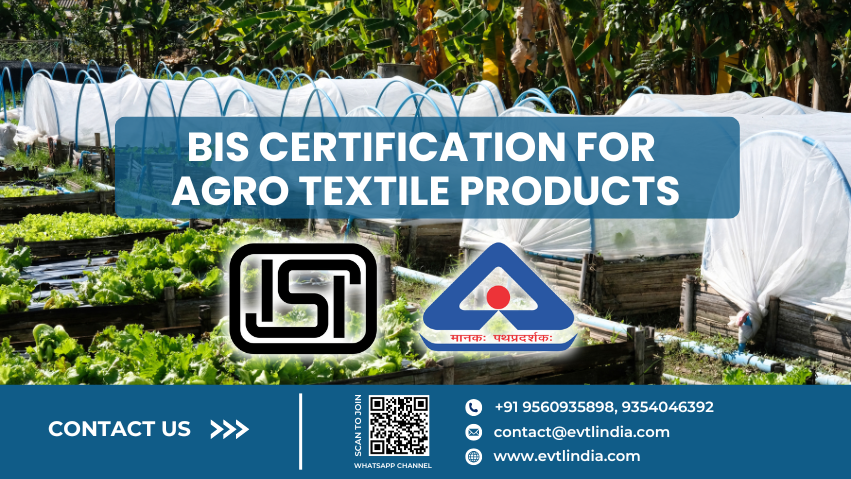
In modern agriculture and
horticulture, Agro textiles have
become indispensable tools for improving crop productivity and protecting
plants from harsh environmental factors. Products such as shade nets, insect
nets, jute agro textiles, windshield nets, and non-woven crop covers serve as
effective barriers against extreme sunlight, wind, weeds, birds, and pests.
As climate conditions continue to fluctuate unpredictably, the role of agro textiles in maximizing crop yields, maintaining soil quality, and shielding produce has grown immensely. To ensure their safety, reliability, and performance, these products must meet stringent quality standards. This is where BIS Certification becomes essential.
What is BIS Certification?
The Bureau of Indian Standards (BIS) is the national body responsible
for the development of Indian standards and the certification of products to
ensure quality, safety, and reliability. BIS operates under the BIS Act, 2016,
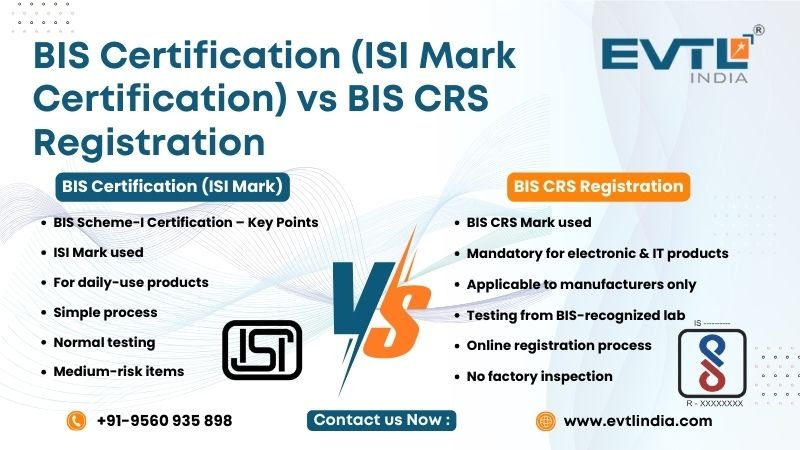
and governs the issuance of the ISI mark,
a symbol that signifies that a product complies with relevant Indian standards.
BIS certification is required for manufacturers to sell their products in the Indian market, whether domestically manufactured or imported. Without the ISI mark, products cannot be lawfully marketed in India.
Why BIS Certification is
Essential for Agro Textile Products
Agro textile products are directly
used in environments that affect food production and the livelihood of farmers.
A minor compromise in the material quality or structural integrity of these
products can result in crop damage and financial loss. Thus, BIS certification
plays a crucial role in:
BIS Standards for Agro
Textile Products
BIS has established 22 Indian Standards covering a wide
range of agro-textile products. These standards define specifications and
performance requirements for various products such as non-woven fabrics,
fencing nets, mulch mats, jute sapling bags, windshield nets, and more.
Some key standards include:
These standards apply to products used in applications ranging from sapling growth to irrigation, fencing, pest protection, and environmental shielding.
BIS Certification Process
for Agro Textiles
Obtaining BIS certification involves a
multi-step procedure that ensures the product complies with the relevant Indian
Standard:
- Documentation: The manufacturer must prepare technical documents including product specifications, quality control procedures, test reports, and factory layout details.
- Application Submission: All documents, along with the application, are submitted through the BIS online portal.
- Application Review: BIS officials examine the documentation to verify completeness and accuracy.
- Factory Audit: BIS appoints inspectors to visit the manufacturing facility, assess the production process, verify quality systems, and collect product samples.
- Sample Testing: The collected samples are tested in BIS-recognized laboratories to evaluate conformity with the applicable Indian Standard.
- License Grant: If all criteria are met, BIS issues a license authorizing the manufacturer to use the ISI mark on certified agro textile products.
- Surveillance: BIS conducts periodic audits and product testing to ensure ongoing compliance with certification requirements.
Cost of BIS Certification
for Agro Textile Products
The total cost of BIS certification
includes:
Although these costs vary based on the type and number of products, investing in certification significantly boosts product credibility and opens doors to a broader market.
Why Choose EVTL India for
BIS Certification?
Achieving BIS certification for agro
textile products involves dealing with technical standards, regulatory
compliance, coordination with officials, and product testing. This can be
overwhelming for manufacturers unfamiliar with the process.
EVTL India is a trusted BIS consultant
offering expert guidance through every stage of certification. Our services
include:
With years of experience and deep domain expertise, EVTL India ensures a smooth, accurate, and efficient certification process for your agro textile products.
Conclusion
As agriculture continues to evolve
with smart materials and climate-resilient solutions, agro textiles play a pivotal role in modern farming. Ensuring that
these products meet quality and safety standards is essential not only for
protecting crops but also for empowering farmers.
BIS certification under relevant
Indian standards is not just a regulatory requirement—it is a stamp of
assurance that the product is tested,
certified, and trusted. Whether you manufacture shade nets, windshield nets, jute bags, or fencing mesh, obtaining
BIS certification will enhance your product's marketability, safety profile,
and customer confidence.